
Reviewed · SEA KAYAKING & BIOLUMINESCENCE
Rangitoto Island: Sea Kayak & Summit Hike Day Trip
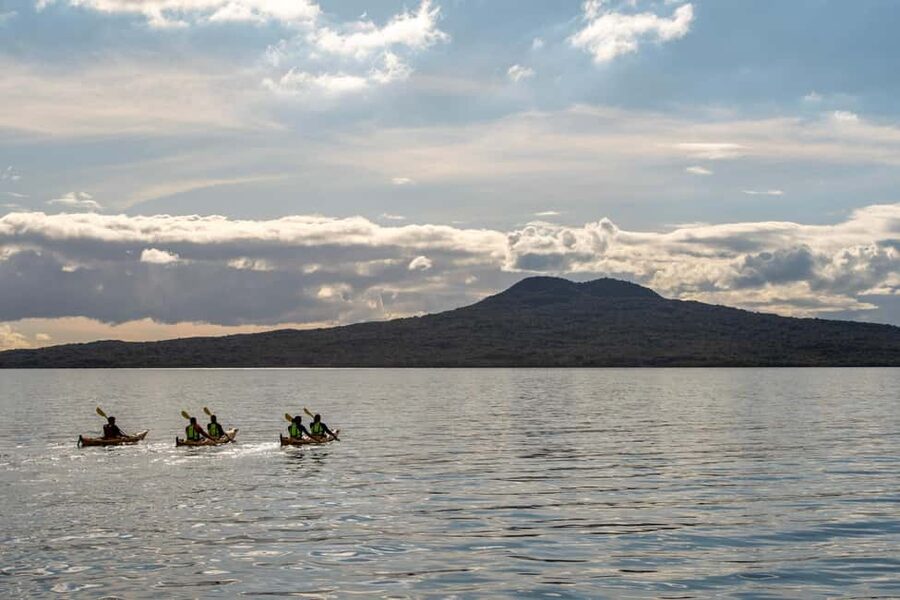
Kayak to a volcano, then hike for 360 views. This Rangitoto Island day trip pairs sea kayaking across Waitemata Harbor with a climb to Auckland’s youngest and most active volcano, plus a proper lunch when you’re ready for a break.
I love two things most: the paddling instruction with qualified guides before you head out, and the payoff of summit views that stretch across the whole Auckland region. You also get a front-row seat to Rangitoto’s island life and volcanic landscape from the water, with chances to spot seabirds along the way.
One consideration: kayaking can feel tougher when conditions turn windy, especially on the return leg, so you’ll want a basic fitness level for paddling and hiking. The hike is described as a leisurely hour, but it’s still on volcanic ground (scoria) and it’s not for everyone with back issues or low mobility.
In This Review
- Quick hits before you go
- Why this Rangitoto day trip feels like more than a standard Auckland tour
- Getting ready: the meeting point and the first briefing
- Crossing Waitemata Harbor: the “sparkling waters” start
- Arriving at Rangitoto: youngest volcano, active landscape, and native plants
- Summit time: 360-degree views that make the effort worth it
- Lunch on Rangitoto: BBQ fuel and a reset before the kayak back
- The paddle back: wind can change the feel, so stay flexible
- What you’re really paying for: value at $144 per person
- Who should book this trip, and who should skip it
- Booking verdict: should you book Rangitoto kayaking and summit hike?
- FAQ
- Where do I meet for the tour?
- How long is the Rangitoto sea kayak and summit hike day trip?
- What is included in the price?
- Will I get kayaking instruction before we go?
- Can I cancel and get a refund?
- Is this tour suitable for everyone?
Quick hits before you go
- Waitemata Harbor paddle: Get out on the water early and view Auckland from a perspective most people miss
- Rangitoto’s volcanic trail: A 1-hour hike to the summit with crater-top panoramas
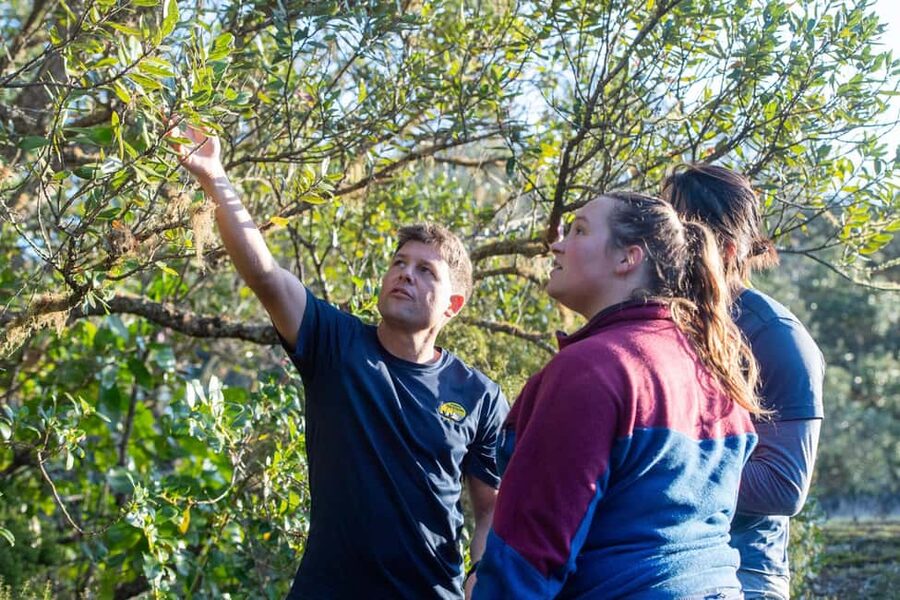
- Pohutukawa + native plants: Rangitoto supports over 200 native trees and flowering plants
- Wildlife sightings are possible: Little Blue Penguins and Cooks Petrels can show up on the route
- Small group size: Limited to 9 participants, which helps during instruction and gear checks
- BBQ lunch plus drinks: Hot and cold refreshments keep you fueled for the hike and paddle back
Why this Rangitoto day trip feels like more than a standard Auckland tour
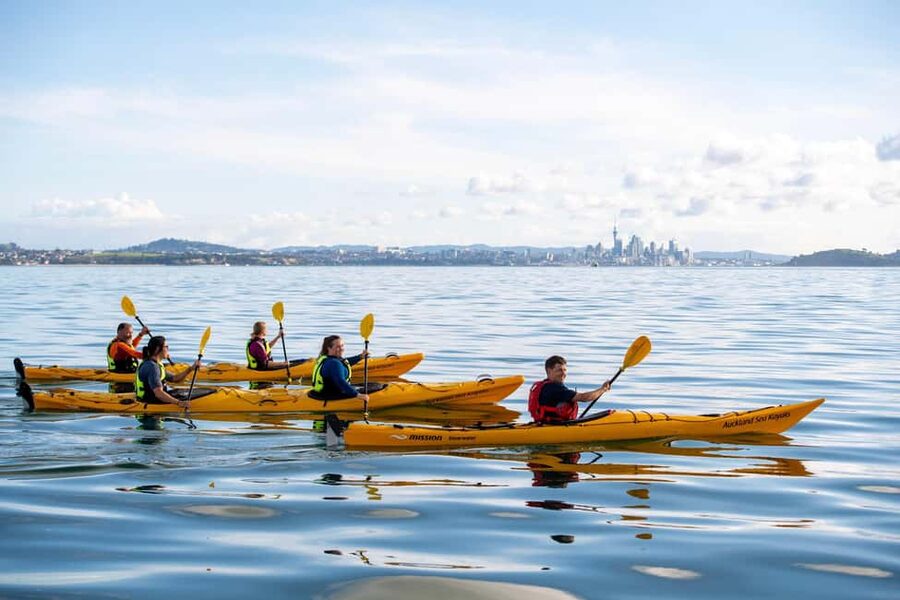
Auckland has plenty of day trips, but this one has a useful rhythm: you start with movement on the water, switch to steady hiking, then end with food and a paddle back. That mix matters. It’s not just sightseeing from a single viewpoint—you see Rangitoto before you even step onto it, and then you get your big view only after the climb.
You also get something hard to fake in photos: scale. From the kayaks, Rangitoto looks like a volcanic lump rising out of the sea. From the summit, you see how that shape relates to the wider Auckland coastline. The day has built-in contrast—harbor water, black volcanic rocks, then a crater rim lookout.
And it’s built for learning. Before you go, you get a safety briefing and paddling instruction so you’re not guessing what to do with a kayak in open water.
More paddles around Auckland, glowing water and all
- Bioluminescence Kayak Tour – Est. 1994
★ 4.0 · 187 reviews - Sunset kayak tour to Rangitoto Island
★ 5.0 · 168 reviews - Clearyak hire at Goat Island Marine Reserve
★ 5.0 · 80 reviews - Day sea kayak tour Rangitoto Island
★ 5.0 · 79 reviews
Getting ready: the meeting point and the first briefing
This trip runs as a one-day outing with English-speaking instruction and a small-group setup (up to 9 people). Plan to arrive at the meeting point on time because the day runs on water schedules.
You’ll meet at St Heliers Beach (384 Tamaki Drive) at the scheduled start time. If you requested pickup, you’ll meet at The Atrium, Auckland War Memorial Museum about 30 minutes before departure. That museum pickup can be helpful if you’re staying closer to the city center.
Before paddling, you’ll get:
- a safety briefing
- paddling instruction
- time to get familiar with the gear
This is a big deal for comfort. One of the strongest notes from the experience is that guides don’t just toss you into the lineup—they coach you on what to do. In one example, a guide named Daniel helped a solo participant who usually gets motion sickness feel more at ease after taking medication beforehand.
What you should bring is simple: comfortable shoes and comfortable clothes. You’ll also want to dress for sea wind, because conditions around Waitemata can change fast.
Crossing Waitemata Harbor: the “sparkling waters” start
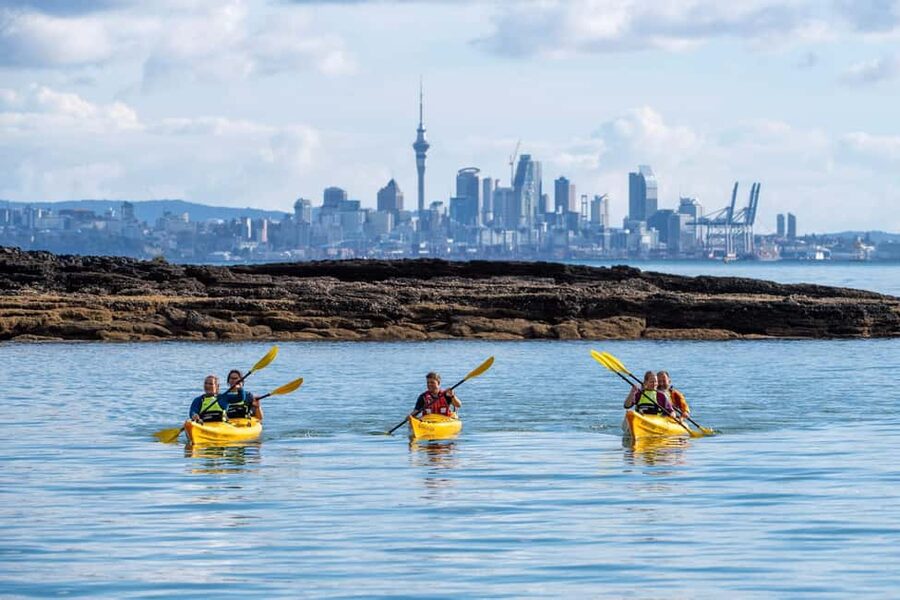
Waitemata Harbor’s name translates to “sparkling waters,” and that’s exactly how it can feel at the start of your paddle. You’re out in open water with real wind on your face, moving past Auckland’s coastline instead of watching it from shore.
This leg is also where you get the first real test of kayaking basics—paddling rhythm, staying balanced, and learning how the kayak responds. The value here is confidence. If you take the instruction seriously and listen during the briefing, the rest of the day feels more like a guided outing and less like a stress test.
There’s also wildlife potential. The route can include sightings of Little Blue Penguins and Cooks Petrels, which is a nice reminder that you’re not just commuting across the harbor—you’re traveling through a living coastal environment.
And since you’re heading toward Rangitoto, this first paddle is your warm-up for the main event. You’ll feel the shift from urban harbor edges to the darker, more volcanic world waiting at the island.
Arriving at Rangitoto: youngest volcano, active landscape, and native plants
Rangitoto is the youngest and most active volcano in Auckland’s region, and the island shows it. Scoria rocks, volcanic texture underfoot, and the way the island holds plant growth all come together into a landscape that looks formed by fire and then patiently reclaimed by nature.
The walk starts with a gradual approach described as a leisurely 1-hour hike to the summit. On the way up, you move through areas cloaked by pohutukawa (the iconic New Zealand coastal tree) and you’ll pass baked scoria rocks. The island supports over 200 native trees and flowering plants, which means you’re not just hiking over lava rubble—you’re crossing an ecosystem.
One of my favorite ways to think about this part: the hike is doing double duty. It’s physical effort, sure, but it’s also a living geology lesson. A guide named Tony, for example, gave clear information about island regeneration after lava flow, which helps you interpret what you’re seeing instead of just ticking off a summit.
If you’re the kind of traveler who likes nature with context, this is where the “expert guide” piece pays off. You’re more likely to notice plants, textures, and trail details because you understand what they mean.
More cones and craters around Auckland to climb
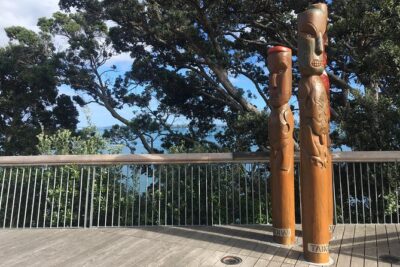
Summit time: 360-degree views that make the effort worth it
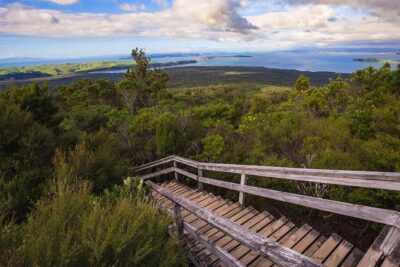
The top is the emotional payoff. After the climb, you reach the crater area and get treated to 360-degree views over Auckland.
That’s the big promise of the day, and it’s also why the kayaking matters. When you’ve already seen the island from the water, the summit view lands harder. You can orient yourself: the water route, the harbor shape, and the broader coastal geometry.
Timing-wise, you’ll have a summit experience that’s long enough to appreciate the view without turning the day into a marathon. The hike is structured for most people with basic fitness, and the guides keep the pace reasonable.
Drawback check: if you’re sensitive to wind or cold, summit time can feel exposed. The view is worth it, but you’ll likely want to keep a layer accessible.
Lunch on Rangitoto: BBQ fuel and a reset before the kayak back
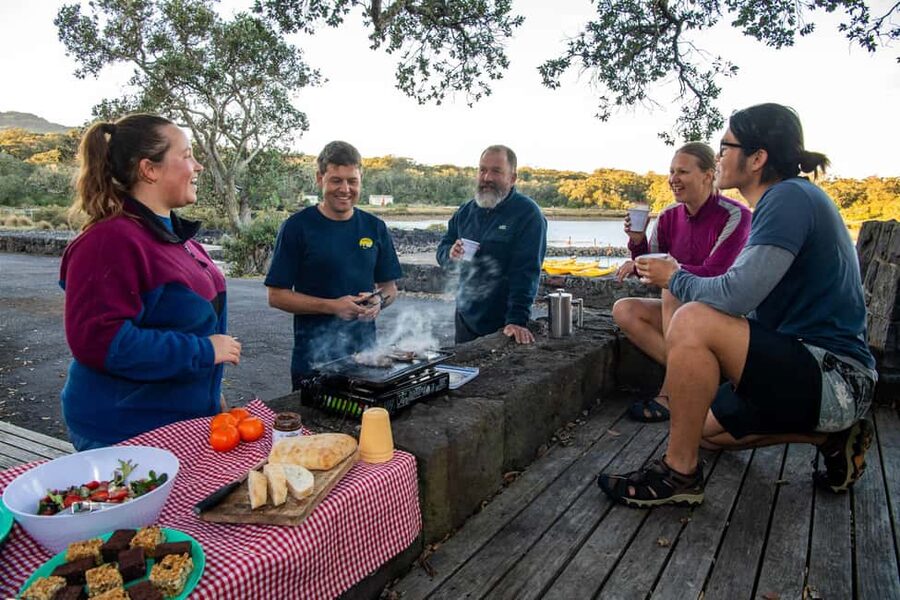
Food might not be the first thing you think about with a volcano hike day, but it’s a practical highlight. On the island, lunch is waiting for you, described as a barbecue lunch with hot and cold drinks. There are also light refreshments included, so you’re not starting the day hungry.
In the field examples, guides cooked different meal styles—one participant noted a delicious BBQ cook, and another specifically mentioned a steak lunch prepared by Daniel before the hike. That timing is smart because it gives you real energy before you start climbing rather than relying on snacks alone.
This is also one of those moments where small details matter. A sit-down lunch in a scenic place helps you cool off after the climb and reset your body before the open-water paddle back.
You might even have time for a quick sea dip before gear gets packed back into the kayaks, but it’s conditional on time and conditions. Don’t plan your day around it—treat it as an optional bonus.
The paddle back: wind can change the feel, so stay flexible
Kayaking back is where you’ll feel the day’s variables. Some days the water is calm enough that the return feels smooth. Other days, wind can make the last stretch more work.
You can see this clearly in the kinds of comments people make: one participant described challenging wind conditions but said the trip was still excellent by the time they reached Rangitoto. Another noted that on the way home it felt like the beach wasn’t getting closer, which is a totally normal sensation when wind and currents nudge you.
Here’s the best way to handle it: stay in your rhythm, listen to your guide, and remember you’ve already done the hardest part—learning the basics and climbing to the summit. The return is about endurance and smart pacing, not heroics.
The guides also use boats and timing to keep everyone moving safely. One review mentioned returning with the help of a sail to help them head back toward St Heliers Bay when conditions required it. So if you’re worried about fatigue, know that the trip is designed with real-water conditions in mind.
What you’re really paying for: value at $144 per person
At $144 per person for a full day, you’re not paying for a quick bus ride. You’re paying for three things that usually cost money individually:
1) Qualified guidance on open water
A safety briefing, paddling instruction, and a small group size (max 9) aren’t “extra.” They’re the product. For many people, that’s the difference between enjoying a kayak day and feeling uneasy out on the water.
2) Equipment support
All kayaking equipment is included, which saves you from renting or buying gear and also means you get the right kit for the conditions.
3) The volcano summit day is bundled with transport and food
You get expert-led direction, a guided climb, and a BBQ lunch with hot and cold drinks. The cost makes sense when you treat lunch + instruction + gear + guide time as one package.
So is it worth it? If you want a day that’s active, scenic, and guided from start to finish, yes. If you’re only interested in a lookout with minimal effort, you’ll probably get less value because the day requires actual participation—paddling and hiking.
Who should book this trip, and who should skip it
This is best for people who enjoy active outdoors time and want a guided structure. You’ll likely love it if you:
- are comfortable being on the water for a significant paddle
- want a volcano summit view with real context
- like small-group instruction instead of feeling lost
You should think twice if you have:
- back problems
- low level of fitness
- wheelchair use
- a body weight above 275 lbs (125 kg)
- age over 95 years
The trip is described as a leisurely 1-hour hike, but it’s still a hike on volcanic terrain. And paddling in open water involves coordination and leg/core effort even if the guide supports the group.
One more practical note: if you’re prone to motion sickness, you can’t assume it will be fine. But you can also take it seriously and plan ahead. Daniel’s guide support made a solo participant with motion sickness feel comfortable enough to enjoy the kayaking, especially after medication.
Booking verdict: should you book Rangitoto kayaking and summit hike?
I think this is a strong book for the right traveler. If you want to see Auckland from the water and from a volcanic summit, and you prefer a small group with real instruction, this day fits the bill. The paddling coaching, the wildlife possibility, and the straightforward summit payoff all work together.
Don’t book it if you mainly want a low-effort sightseeing day, or if your body can’t handle open-water paddling and a volcanic hike. And if wind worries you, remember conditions can shift—so plan to stay flexible and trust your guide.
If you’re up for an active day with a clear view payoff, Rangitoto by sea kayak is one of the more memorable ways to experience Auckland beyond the city.
FAQ
Where do I meet for the tour?
You’ll meet at St Heliers Beach (384 Tamaki Drive) at the scheduled trip start time. If you requested pickup, meet at The Atrium, Auckland War Memorial Museum about 30 minutes before the tour start time.
How long is the Rangitoto sea kayak and summit hike day trip?
It’s a one-day trip, with the duration listed as 1 day. Starting times depend on availability.
What is included in the price?
The tour includes a guide, safety briefing and paddling instruction, all kayaking equipment, light refreshments, a barbecue lunch, and hot and cold drinks.
Will I get kayaking instruction before we go?
Yes. You’ll receive a safety briefing and paddling instruction before you start kayaking across Waitemata Harbor.
Can I cancel and get a refund?
Yes. You can cancel up to 24 hours in advance for a full refund.
Is this tour suitable for everyone?
No. It’s not suitable for people with back problems, wheelchair users, people over 275 lbs (125 kg), people with low level of fitness, or people over 95 years.
More Tours Around Auckland
- Waiheke Island: Ferry & Hop-On Hop-Off Explorer Bus Tickets
★ 4.6 · 3,311 reviews - Hobbiton & Waitomo Caves Guided Day Trip from Auckland incl lunch
★ 5.0 · 2,677 reviews - From Auckland: Hobbiton & Waitomo Caves Day Trip with Lunch
★ 4.9 · 2,505 reviews - Auckland Dolphin and Whale Watching Eco-Safari Cruise
★ 4.5 · 1,790 reviews - Skydive Auckland
★ 5.0 · 1,516 reviews
Climbing Auckland's Volcanoes
- Sunset kayak tour to Rangitoto Island
★ 5.0 · 168 reviews - Half-Day Volcano Tour from Auckland
★ 5.0 · 124 reviews - Auckland: Inner-City Glowworm Experience in Ancient Volcano
★ 4.8 · 109 reviews - Auckland to Rangitoto Island Ferry
★ 4.0 · 109 reviews - Day sea kayak tour Rangitoto Island
★ 5.0 · 79 reviews
Paddle the Gulf After Dark
- Auckland: Night Kayak Tour in Glowing Bioluminescent Waters
★ 4.9 · 259 reviews - Bioluminescence Kayak Tour – Est. 1994
★ 4.0 · 187 reviews - Sunset kayak tour to Rangitoto Island
★ 5.0 · 168 reviews - Clearyak hire at Goat Island Marine Reserve
★ 5.0 · 80 reviews - Day sea kayak tour Rangitoto Island
★ 5.0 · 79 reviews
Fresh off the boat: newer Auckland tours to browse

Sea Kayaking & Bioluminescence, compared.
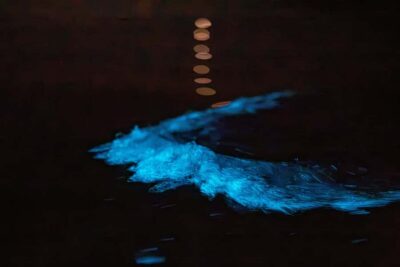 ★ 4.9Night Kayak Tour in Glowing Bioluminescent WatersFrom $56259 reviews
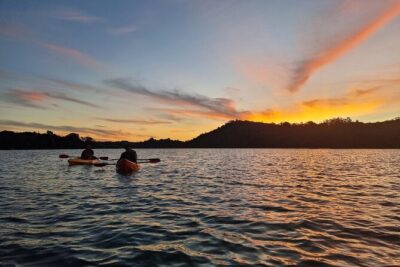 ★ 4.0Bioluminescence Kayak Tour – Est. 1994From $73187 reviews
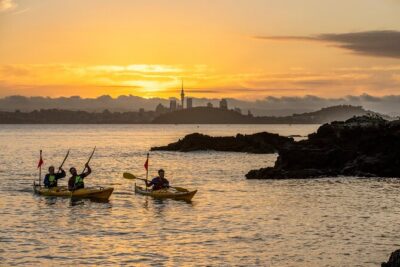 ★ 5.0Sunset kayak tour to Rangitoto IslandFrom $152168 reviews
 ★ 5.0Clearyak hire at Goat Island Marine ReserveFrom $17480 reviews
 ★ 5.0Day sea kayak tour Rangitoto IslandFrom $15279 reviews
 ★ 5.0Sunset & Night Sea Kayak Tour to Rangitoto IslandFrom $13860 reviews
 ★ 4.4Bioluminescence Kayak Tour with GuideFrom $7142 reviews
 ★ 5.0Motukorea / Browns Island Sea Kayak JourneyFrom $12135 reviews
Browse the lists this tour appears in