
Reviewed · HARBOUR CRUISES & SAILING TRIPS
Auckland Dolphin and Whale Watching Eco-Safari Cruise
Six words: whales, dolphins, and real research.
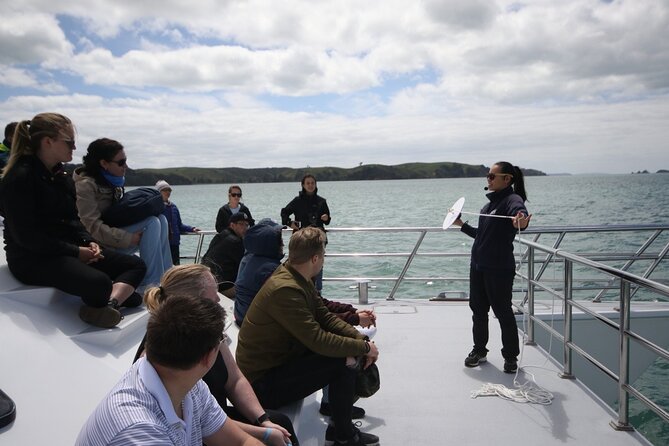
This Auckland eco safari is built around marine research scientists and close-to-the-action wildlife watching from a custom 65-foot catamaran. I like that it mixes big-animal spotting with on-the-water education that helps you actually tell what you’re looking at. I also like the conservation angle: every ticket supports Marine Mammal Conservation. The one drawback to keep in mind is the big one with any wild animal cruise—whale sightings aren’t guaranteed, and some days turn up lots of dolphins but no whales.
You’ll meet at the New Zealand Maritime Museum at Viaduct Harbour, then cruise out through the Hauraki Gulf Marine Park with expert commentary and changing island views. Expect up to six whale types on the radar, plus dolphins, seals, seabirds, and the very real chance of penguins.
In This Review
- Key things to know before you go
- Why this Hauraki Gulf eco cruise feels different than a typical whale trip
- Viaduct Harbour start: getting on board without losing time
- The catamaran ride: comfort, deck spots, and what rough water changes
- What you’re actually looking for: whales, dolphins, seals, penguins, and seabirds
- Whales: possible, not promised
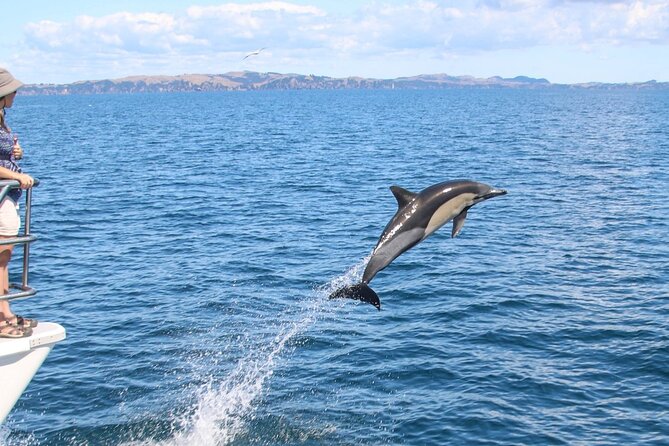
- Dolphins: often the highlight
- Seals and seabirds: the bonus wildlife you shouldn’t ignore
- Stop-by-stop route: what each point means while you’re cruising
- New Zealand Maritime Museum (start)
- Viaduct Harbour
- Auckland Harbour Bridge
- Rangitoto Island
- Waitemata Harbour
- Hauraki Gulf Marine Park
- Auckland Whale and Dolphin Safari (main wildlife searching phase)
- Motuihe Island, Motutapu Island, and Tiritiri Matangi Island
- North Head Historic Reserve
- The conservation angle: what your ticket funds beyond the trip
- Price and value: is $135.91 per person fair for 4.5 hours?
- The big reality: no whales happens, and the crew still runs a strong day
- Practical tips that make or break your experience
- Who should book this eco safari (and who might look elsewhere)
- Should you book this Auckland dolphin and whale eco cruise?
- FAQ
- What wildlife can I expect to see on the cruise?
- How long is the Auckland Dolphin and Whale Watching Eco-Safari Cruise?
- Where do I meet the tour, and where does it end?
- Are food and drinks included?
- What if I don’t see any whales or other marine mammals?
- When should I check in before departure?
Key things to know before you go
- You’re sailing from Viaduct Harbour right in downtown Auckland, not out in some faraway dock
- Marine research scientists are on board and talk about what they’re tracking and why it matters
- Dolphins are the most consistent win; whales are possible but still wild and unpredictable
- You get conservation support baked into your ticket, not just a feel-good speech
- Deck position matters for photos, especially when you’re moving out and around wildlife areas
- Check-in closes 15 minutes early or you risk losing your allocated seat
Why this Hauraki Gulf eco cruise feels different than a typical whale trip
If you’ve done a few tourist boat rides, you know the script: spot something big, cheer, repeat. This one keeps the cheering, but it also gives you a way to read the ocean. The commentary is tied to marine research in the Hauraki Gulf Marine Park—home to five marine preserves and home to some 23 species—so the trip feels less like luck and more like a guided hunt.
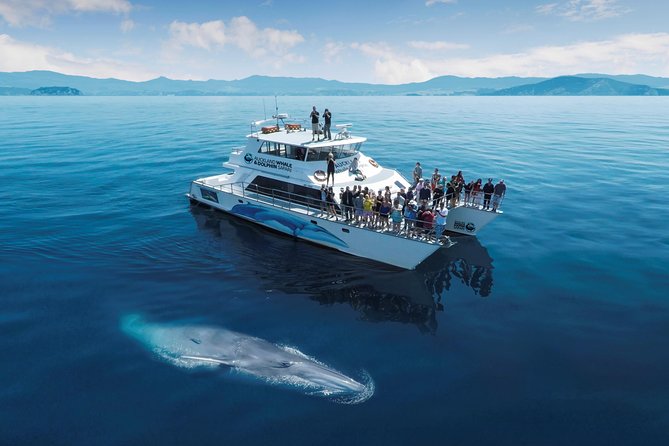
The other difference is how they set you up for viewing. The vessel is a custom-built 65-foot catamaran designed so you can scan the water for whales and dolphins, not just sit and wait. You’ll spend a long stretch out on the water, and you’ll cycle through different viewpoints as the boat changes course.
And yes, you still want the animals. But even when the day leans “dolphins only,” it can still feel like a proper experience because you’re learning what behaviors matter and what to watch for.
More time on the Waitematā: other Auckland cruises and sails
- Auckland: Whale and Dolphin Watching Half-Day Eco Cruise
★ 4.5 · 1,072 reviews - Auckland Harbour Sailboat Cruise Including Three Course Dinner
★ 4.5 · 476 reviews - America’s Cup 2-Hour Sailing Experience Waitemata Harbour
★ 4.8 · 370 reviews - Auckland: Scenic Harbour Sightseeing Cruise
★ 4.5 · 369 reviews
Viaduct Harbour start: getting on board without losing time
Your day begins at the New Zealand Maritime Museum at Viaduct Harbour. The meeting point is Eastern Viaduct in Auckland Central, and the tour ends back at the same meeting point, so you don’t have to plan a second pickup.
Here’s the practical part: check in closes 15 minutes prior to departure. That’s short. If you’re using public transport or you’re grabbing coffee nearby, leave yourself buffer time. Late arrivals can lose their allocated seats, and you don’t want your “maybe we’ll see a whale” day to start with stress.
Once you’re onboard, the pace is friendly and organized. The boat crew runs the show with a clear goal: find marine life while keeping wildlife stress low. On days when conditions are choppy, you’ll feel that focus in how they guide the vessel and where they position the boat for viewing.
The catamaran ride: comfort, deck spots, and what rough water changes
This is a 4.5-hour safari cruise (about 4 hours 30 minutes). That’s long enough that you’ll want to be comfortable. The catamaran layout helps with stability, and you’ll have open deck viewing plus room inside if the weather turns.
A couple things to plan for:
- Dress for wind, not just sun. Auckland can flip fast. Warm layers and weatherproof gear are smart.
- Sunscreen still matters, even when it feels breezy. You’ll likely spend time outdoors.
- Flat-soled shoes help if you’re moving around for photos.
Also, deck position is not a trivial detail. Many people find the best viewing when underway, which is often the front deck area. If you want photos, think about where you’ll stand when the boat accelerates, turns, and slows for sightings. When the boat is moving, you can get cleaner lines for video and better timing for that quick “they’re right there” moment.
If you’re sensitive to motion, consider the day’s sea state. Some outings report rougher water, even though the crew aims to keep the ride manageable.
What you’re actually looking for: whales, dolphins, seals, penguins, and seabirds
The headline promise is whales and dolphins, but the trip is built for a wider set of wildlife, and that’s where the experience gets fun.
More chances to spot the pods off Auckland
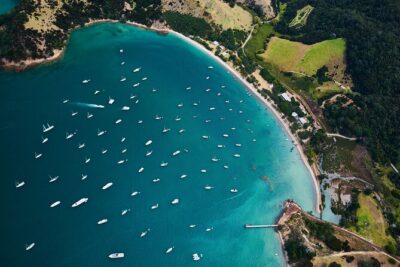
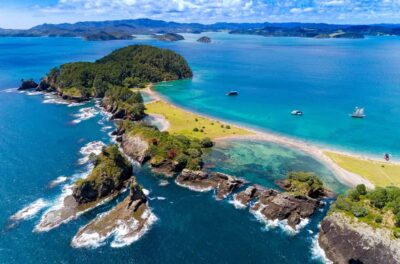
Whales: possible, not promised
The crew can scan for up to six types of whales. In the information for this safari, the named target includes Bryde’s whales, along with bottlenose dolphins as a common sight. Even with expert searching, whales remain wild and may be hard to spot on any given day.
That said, when whales show up, it’s a major payoff because the crew isn’t just “point and hope.” They’re tracking patterns and sharing what they’re monitoring.
Dolphins: often the highlight
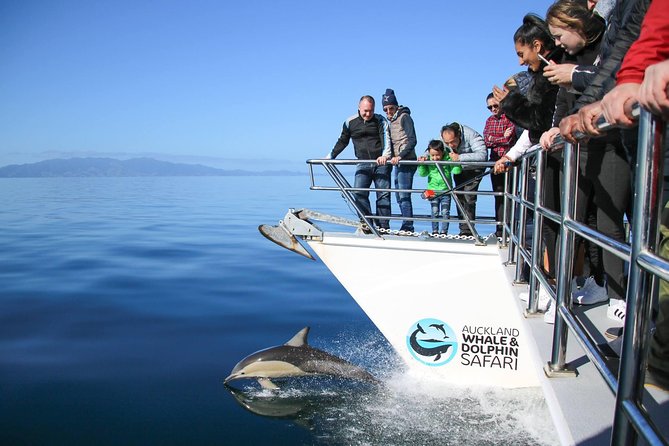
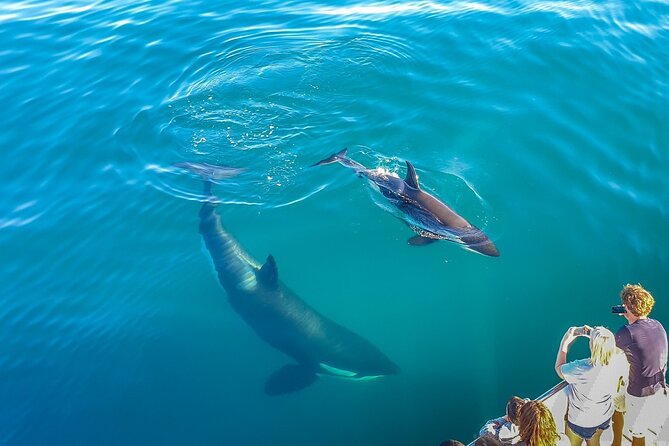
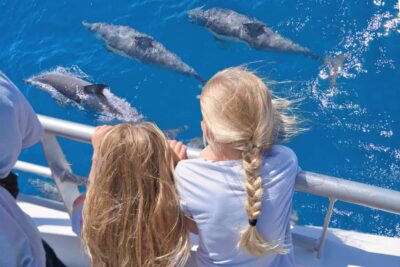
If you want the most reliable animal of the day, dolphins are the one. You’ll likely hear about pods and see repeated surfacing behavior. On good days, dolphins can play near the boat—sometimes up close enough to get video that feels almost unreal.
Seals and seabirds: the bonus wildlife you shouldn’t ignore
Seals can also appear, and seabirds are a big part of the wildlife picture in the Hauraki Gulf Marine Park. You’ll be watching for birds like Australasian gannets, petrels, shearwaters, and white-fronted terns, all of which can be seen soaring or plunging into the sea.
And then there’s the chance of blue penguins. Bring your camera ready. People often spot them as a quick but memorable moment, especially when the crew spots the right area.
Stop-by-stop route: what each point means while you’re cruising
Even though you’re not getting off the boat, the cruise route matters because it explains why the scenery and viewing conditions change.
New Zealand Maritime Museum (start)
This is where you check in and meet the crew. It’s also a good moment to get oriented: you’ll want your camera, binoculars, and warm layer set before you leave.
Viaduct Harbour
As you depart, you get downtown views and a fast sense of scale—then the water opens up. This is where your “we’re actually on a wildlife safari now” feeling kicks in.
Auckland Harbour Bridge
Passing the bridge gives you a classic framing shot of Auckland. It also helps set expectations: you’re moving from city water into the bigger marine space of the gulf.
Rangitoto Island
Rangitoto often anchors the skyline on one side, and its presence is a reminder that you’re in a volcanic landscape with islands nearby. On a clear day, this section can be pretty striking, and it’s a good time to scan both shorelines and the water between islands.
Waitemata Harbour
This stretch keeps the pace moving, and it’s typically part of the transition between city-adjacent cruising and the open gulf where marine wildlife becomes more likely.
Hauraki Gulf Marine Park
This is the big zone for the whole trip. The crew’s commentary becomes more specific here: marine preserves, what makes the gulf biologically diverse, and why certain areas attract different wildlife.
Auckland Whale and Dolphin Safari (main wildlife searching phase)
This part is the core of the experience—searching for whales, dolphins, seals, and birds. You’ll likely spend longer periods scanning and then shifting course if wildlife appears. This is when deck choices matter most.
Motuihe Island, Motutapu Island, and Tiritiri Matangi Island
These islands add variety to your viewing. You’re not just staring at open water; you’re watching a chain of places where wildlife traffic patterns can vary. Island sighting time also tends to break up the cruise, so you’re not stuck in one flat view for hours.
North Head Historic Reserve
As the cruise progresses toward your return, you’ll see the coastline tighten in and get more visual anchors. It’s a good time to keep an eye on birds, since seabirds often show up in different feeding zones as the boat changes direction.
The conservation angle: what your ticket funds beyond the trip
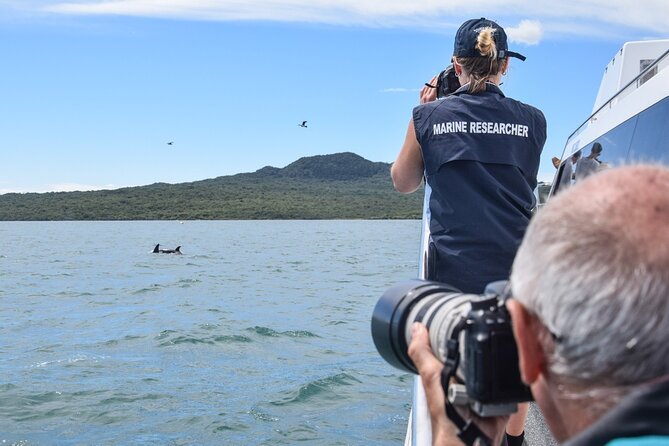
This isn’t marketed as just a wildlife viewing day. Every ticket you purchase contributes directly to Marine Mammal Conservation. That matters because it turns your money into action that can support ongoing monitoring, research, and protection work.
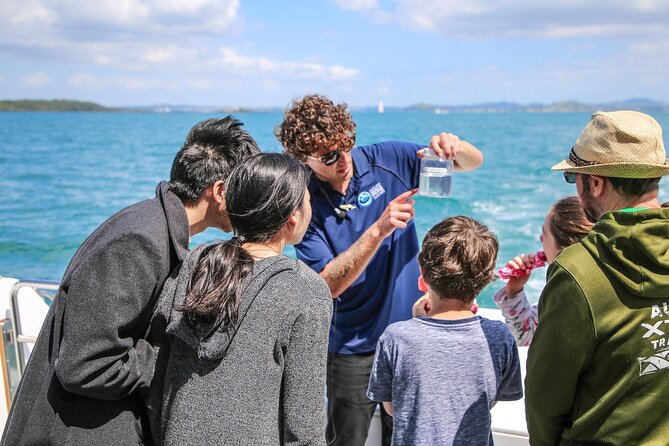
On top of that, the boat includes expert commentary and interaction with marine research scientists. When you hear why a behavior is tracked or how research partnerships work, the trip stops being only about spotting animals and becomes about supporting the knowledge that helps protect them.
If you care about conservation, this is one of the reasons the trip earns repeat-booking love.
Price and value: is $135.91 per person fair for 4.5 hours?
At $135.91 per person for about 4.5 hours, the value comes down to three things: (1) the chance of meaningful sightings, (2) the quality of the scientific narration, and (3) the conservation contribution.
Here’s how that shakes out in real terms:
- Chance of dolphins is high. Even on whale-less days, dolphins can make the trip feel worth it.
- Whales are the gamble. You’re not paying for a guaranteed whale show. You’re paying for effort, tracking, and expert help to find whales when they’re around.
- Your ticket supports conservation. That’s not a small footnote; it’s part of the deal.
- There’s a no-marine-mammal safety net. If you don’t see any marine mammals during your trip, you can go again another day at no extra charge.
If you’re visiting Auckland with limited time and you want one “core nature” activity, this is priced like a real wildlife experience—not a cheap thrill ride. If you’re extremely whale-focused and your travel window doesn’t allow any chance of returning, you should treat whales as possible, not guaranteed.
The big reality: no whales happens, and the crew still runs a strong day
Wild animals don’t read schedules. Some people go out on a perfect-looking day and still end up with dolphins only—or fewer animals than hoped. That can feel disappointing, especially if whales are the reason you booked.
What makes this tour easier to handle emotionally is that the crew is actively searching, not just chatting while the boat drifts. When the day doesn’t deliver whales, you still get a structured viewing safari with education, and you’re more likely to catch other wildlife: seabirds, seals, and penguins.
Also, in cases where no marine mammals are seen, the operator offers a free return another day. People have described receiving vouchers when sightings were limited, which reinforces that they try to protect your value when the ocean doesn’t cooperate.
If you’re going, go with a good attitude and aim your expectations at the full ecosystem, not just the whale checklist.
Practical tips that make or break your experience
These are small things that matter on a boat where your viewing opportunities can be brief.
- Bring binoculars. It makes birds and distant surfacing easier to interpret.
- Pack sunscreen and a hat with a chin strap. Wind can steal hats fast.
- Dress in warm layers and weatherproof gear. The wind on the gulf can be colder than you expect.
- Use flat-soled shoes. You’ll want stable footing if you move for photos.
- Have your phone/camera ready, not buried. If dolphins or birds show up suddenly, you don’t want to miss the moment.
- Consider where you’ll stand for sound. In some conditions, mic volume can be tricky, so if you care about the commentary, try to position yourself where you can hear.
One more tip: if you’re sensitive to crowds, remember the group limit is up to 99 travelers. On busy seasons, it can feel packed, especially when you’re trying to access deck edges for photos or when you want to step inside during rain.
Who should book this eco safari (and who might look elsewhere)
This tour is a strong fit if you:
- want a downtown Auckland departure with a serious wildlife focus
- like guided education tied to real marine research
- want the best odds of seeing dolphins and a chance at whales
- care about conservation contributions in your travel dollars
It’s also a good choice for couples, families, and solo travelers because the cruise is structured and the boat supports viewing from both inside and outside.
You might think twice if:
- your trip is extremely time-limited and you’re only satisfied by whales (not dolphins, seals, penguins, and seabirds)
- you get motion sick easily and can’t manage choppy conditions, since weather can change quickly
Should you book this Auckland dolphin and whale eco cruise?
I’d book it if you want a real, science-informed wildlife outing from the center of Auckland. The combination of marine research scientists on board, a comfortable catamaran setup, and the wildlife diversity of the Hauraki Gulf Marine Park gives you more than a basic animal chase. Even when whales don’t show, dolphins and seabirds can make the day memorable, and the conservation angle adds weight.
Just go in with the right mindset: you’re buying a guided chance to see wild animals, not a guaranteed whale performance. If you’re okay with that tradeoff, this is one of the better ways to spend a half day on the water in Auckland.
FAQ
What wildlife can I expect to see on the cruise?
You’re set up to look for whales, dolphins, seals, and rare seabirds. The cruise also notes the possibility of spotting blue penguins, and the onboard team may point out species like bottlenose dolphins and Bryde’s whales when they’re in the area.
How long is the Auckland Dolphin and Whale Watching Eco-Safari Cruise?
The duration is about 4 hours 30 minutes.
Where do I meet the tour, and where does it end?
You meet at Eastern Viaduct, Auckland Central (near the New Zealand Maritime Museum at Viaduct Harbour). The tour ends back at the same meeting point.
Are food and drinks included?
No. Food and drinks are not included, but you can buy them onboard.
What if I don’t see any whales or other marine mammals?
Wildlife sightings can’t be guaranteed. If you don’t see any marine mammals during your trip, you can go again another day at no extra charge.
When should I check in before departure?
Check-in closes 15 minutes prior to the stated departure time, and arriving late can risk losing your allocated seats.
Kiwi, Birds and Quiet Islands
- Afternoon Piha Beach and Rainforest Tour from Auckland
★ 5.0 · 807 reviews - Waiheke Island: Zipline and Native Forest Adventure Trip
★ 4.9 · 695 reviews - Waitakere Ranges Wilderness Experience Tour from Auckland
★ 4.8 · 340 reviews - Coast and Rainforest Eco-Tour from Auckland with Picnic Lunch
★ 5.0 · 264 reviews - Piha Waitakere Rainforest Wine Tour from Auckland
★ 5.0 · 201 reviews
Whales, Dolphins and the Gulf
- Auckland: Whale and Dolphin Watching Half-Day Eco Cruise
★ 4.5 · 1,072 reviews - Auckland: Tikapa Moana Whales, Dolphins and Islands Cruise
★ 3.9 · 292 reviews - Auckland: Tikapa Moana Dolphin, Whale and Island Cruise
★ 4.0 · 17 reviews - Auckland: Bay of Islands Day Tour with Dolphin Cruise
★ 5.0 · 11 reviews
Out on the Waitematā
- Auckland: Whale and Dolphin Watching Half-Day Eco Cruise
★ 4.5 · 1,072 reviews - Auckland Harbour Sailboat Cruise Including Three Course Dinner
★ 4.5 · 476 reviews - America’s Cup 2-Hour Sailing Experience Waitemata Harbour
★ 4.8 · 370 reviews - Auckland: Scenic Harbour Sightseeing Cruise
★ 4.5 · 369 reviews - Auckland: Harbour Sailing Cruise with 3-Course Dinner
★ 4.5 · 319 reviews
Fresh off the boat: newer Auckland tours to browse


Harbour Cruises & Sailing Trips, compared.
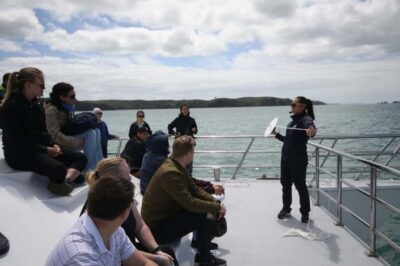 ★ 4.5Whale and Dolphin Watching Half-Day Eco CruiseFrom $1301,072 reviews
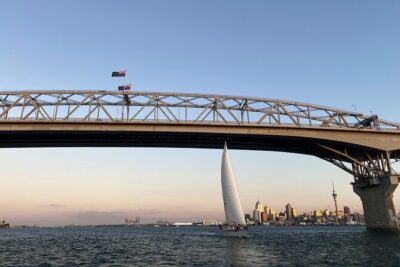 ★ 4.5Auckland Harbour Sailboat Cruise Including Three Course DinnerFrom $105476 reviews
 ★ 4.8America’s Cup 2-Hour Sailing Experience Waitemata HarbourFrom $125370 reviews
 ★ 4.5Scenic Harbour Sightseeing CruiseFrom $35369 reviews
 ★ 4.5Harbour Sailing Cruise with 3-Course DinnerFrom $95319 reviews
 ★ 4.7Auckland Harbour 1.5-Hour Sailing CruiseFrom $65301 reviews
 ★ 4.5America’s Cup Sailing on Auckland’s Waitemata HarbourFrom $130298 reviews
 ★ 3.9Tikapa Moana Whales, Dolphins and Islands CruiseFrom $92292 reviews
Browse the lists this tour appears in