
Reviewed · AUCKLAND CITY SIGHTSEEING
Auckland City Self Guided Walking Tour with an APP
Auckland on your own schedule. This self-guided walking tour uses an APP to help you connect the city’s big landmarks with the smaller stories in between, from downtown piazzas to harbour viewpoints. You’re not stuck to a rigid group pace, and that matters in a city where the route feels better when you can pause for photos and coffee.
Two things I really like: the low price ($9.99) and the fact that most stops are free to enter, so you’re paying mainly for the route and guidance—not a pile of ticket costs. I also like that the app works like a smart companion: it keeps you moving, but you still get time to wander and take breaks without feeling like you’re falling behind.
One consideration: this is still a proper walking afternoon. At about 4 to 5 hours, you’ll want comfortable shoes and a phone with enough battery for navigation, especially if you linger at places like Sky Tower and Parnell Rose Gardens.
In This Review
- Key highlights you’ll feel right away
- Entering the route at Dingwall Building on Queen Street
- Te Komititanga Square and the Māori-designed welcome
- Bronze leadership at the Maori Chieftain Statue
- Ferry Building: the city’s transport heartbeat since 1912
- Viaduct Harbour: port past, superyacht present
- Wairau Creek Pedestrian Bridge: a working harbour view
- Wynyard Quarter: former tanks and silos, now public space
- Victoria Park: a city lawn with layers of meaning
- St. Patrick’s Cathedral: Gothic Revival, volcanic stone, and real organ and bells
- Sky Tower: views and earthquake-smart engineering
- Auckland Town Hall: Progressive Gothic and LGBTQ+ rights since the 1970s
- Albert Park: Victorian elegance on a former pā site
- University of Auckland clock tower: a symbol of learning from 1926
- Parnell Rose Gardens: the calm, colorful ending
- How long it really takes (and how to pace it)
- Price and value: $9.99 for a full-feeling Auckland sampler
- Who this walking tour is best for
- Should you book this Auckland city self-guided walk?
- FAQ
- How long is the Auckland City Self Guided Walking Tour?
- Where does the tour start and end?
- Is this tour self-guided or led by a person?
- What is the price?
- Do I need to pay for entry at the stops?
- Is St. Patrick’s Cathedral included with the tour?
- When can I start the tour?
- Is there free cancellation?
Key highlights you’ll feel right away

- A well-paced downtown-to-waterfront loop that starts near Queen Street and ends in Parnell
- Free entry at most stops, so your money goes to convenience and time-saved planning
- Story stops that go beyond postcard Auckland, from Māori-inspired design to LGBTQ+ progress in architecture
- Harbour engineering views, including the Wairau Creek Pedestrian Bridge bascule action
- Gothic landmarks you can actually spend time in, with St. Patrick’s Cathedral admission included
- Green breaks built into the route, including Victoria Park and Albert Park
Entering the route at Dingwall Building on Queen Street

Your tour begins at the Dingwall Building, 87/93 Queen Street, Auckland Central. This is a smart starting choice because it puts you in the heart of the city—walkable, easy to orient yourself, and close to public transport. You’re also starting in an area with plenty of small cafés and quick food options, which helps if you want to pace the day rather than sprint it.
Because this is self-guided with an app, your “schedule” is really a sequence of stops. The app keeps things simple: you follow each stop, spend as long as you want, then move on. That’s great if you like control—like deciding when you need a short rest instead of forcing yourself to listen to announcements on a timer.
You’re also ending at Parnell Rose Gardens. That end point matters because it lets the walk “cool down” visually—less concrete, more hillside views, and a calmer finale.
More ways to see Auckland in a day
- Waiheke Island: Ferry & Hop-On Hop-Off Explorer Bus Tickets
★ 4.6 · 3,311 reviews - Half-day Discover Auckland City Sightseeing Tour
★ 5.0 · 1,080 reviews - Auckland: Hop-On Hop-Off Explorer Bus Ticket
★ 4.4 · 1,064 reviews - Auckland Scenic Half-Day City Sightseeing Tour
★ 4.8 · 532 reviews
Te Komititanga Square and the Māori-designed welcome
Stop one is Te Komititanga Square, a newly transformed public space. What I like here is the shift in mood: it used to be a noisy roadway, and now it’s a welcoming piazza. The paving patterns are Māori-inspired, so you’re not just arriving in a pretty square—you’re stepping into a place built to connect parts of the city (including the city and the waterfront).
Right away, this stop sets a theme for the whole tour: Auckland is layered. Even before you hit the big-name sights, you’re learning how design and story work together here.
Bronze leadership at the Maori Chieftain Statue
Next is the Maori Chieftain Statue, a bronze sculpture by Molly Macalister from 1967. It shows a peaceful rangatira in a ceremonial kaitaka cloak, and the details matter: the sculpture challenges stereotypes by keeping the figure dignified and composed, with the mere pointed down.
This stop is short (about five minutes), but it’s a good “thinking pause.” If you tend to speed past monuments, slow down just a bit here. A quick moment of context can change how you notice other public artworks later on the route.
Ferry Building: the city’s transport heartbeat since 1912
At the Ferry Building, you’ll see a golden Edwardian Baroque building from 1912. This is Auckland’s old-school transport hub—more than a pretty façade, it has long been the place where people moved between waterfront and city. It’s also tied to social moments like wartime farewells.
Even if you don’t plan to ride the ferry, this is useful to visit because it gives you a practical sense of how Auckland runs. The waterfront isn’t just scenery here; it’s part of daily life. You’ll likely notice cafés and ongoing ferry activity, which makes the history feel current rather than museum-quiet.
More Auckland walks, backstreets and stories


Viaduct Harbour: port past, superyacht present
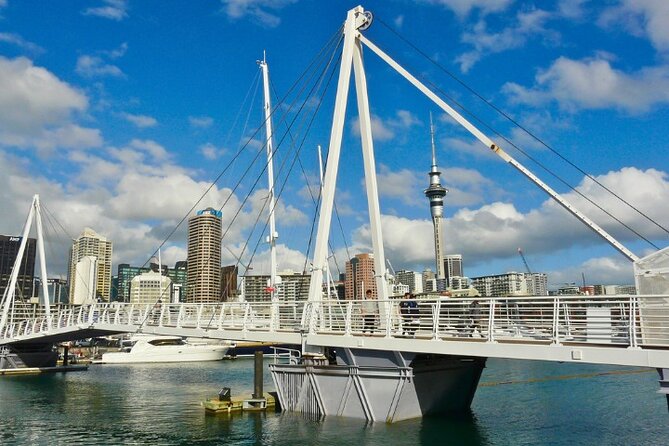
Stop four is Viaduct Harbour, where a former working port now feels like a modern playground. The vibe is different from the earlier cultural stops: think waterfront dining, views, and an obvious “event” energy. The route includes mention of America’s Cup history too, so if you’re a sports person, you can connect the dots as you walk.
This is one of the best places on the route to time your own break. If you can, plan to hit it around golden hour. The harbour views are the kind that reward taking your time instead of snapping and moving on.
Wairau Creek Pedestrian Bridge: a working harbour view
The Wairau Creek Pedestrian Bridge is one of those stops that feels technical in the best way. It connects Viaduct to Wynyard Quarter and is described as a bascule drawbridge—meaning it lifts to let tall ships pass.
You’re there for about five minutes, but it’s worth using that time actively. Look at the structure and imagine the ships coming through. It’s a fun way to connect modern engineering to the harbour’s working past without needing a full day of tours.
Wynyard Quarter: former tanks and silos, now public space
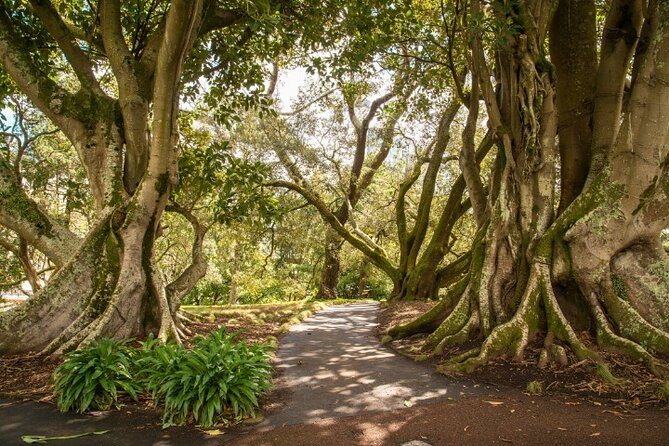
Next comes Wynyard Quarter, a sustainable waterfront area made from repurposed oil tanks and silos. This is a big part of why I like self-guided walks here: you can wander at your own speed and get a feel for the place instead of just checking boxes.
This stop is described as having creative spaces, Silo Park events, eco-friendly buildings, and family-friendly fountains. If you’re traveling with kids or you just want a less formal break, this is where the route gives you options. It’s also a reminder that Auckland is actively reinventing itself, not just preserving.
Victoria Park: a city lawn with layers of meaning
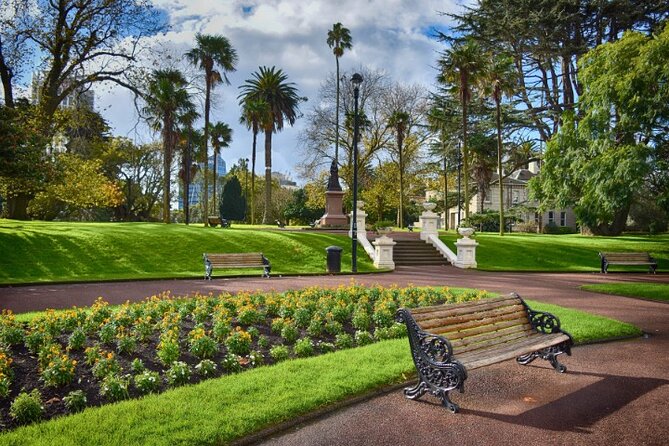
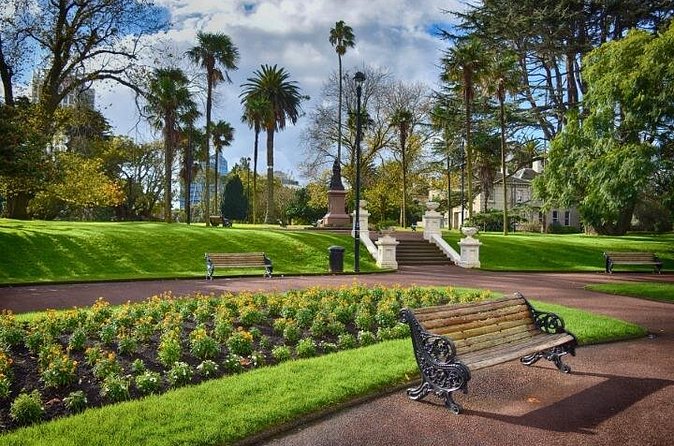
Stop seven is Victoria Park, Auckland’s big green front lawn in the city center. It’s listed as one of 200+ parks that make the city easy to live in. What’s useful here is that it isn’t just “nice grass.” The park sits on a former Māori pā site, so you get both nature and land history in the same place.
Walk a loop if you can. Look for the contrast: tall trees and open lawns right next to glass-and-stone city buildings. It’s an antidote to walking too long in streets that feel narrow or busy.
St. Patrick’s Cathedral: Gothic Revival, volcanic stone, and real organ and bells
Now you get into the standout interior stop: St. Patrick’s Cathedral. It’s a Gothic Revival masterpiece from 1907 built with volcanic scoria stone, and it’s described as New Zealand’s most significant heritage building. Admission here is included, and that’s a big deal value-wise.
Inside, the tour description points you toward Roman bells, a London organ, and stained glass windows. Even if you don’t have a cathedral obsession, this is the kind of place that makes the effort of a walking tour feel justified. It’s also a different Auckland flavor than waterfront views—cool stone, slow acoustics, and details you can’t appreciate at street level.
Plan on about 15 minutes. That’s usually enough time to take in the key features without turning it into a long sit-down.
Sky Tower: views and earthquake-smart engineering
Stop nine is the Sky Tower, Southern Hemisphere’s tallest structure at 328m. The description also notes earthquake resistance, which matters in a country that thinks about seismic risk for good reasons.
You’re on the clock for about 20 minutes, which is a comfortable window if you primarily want exterior views and time to take your bearings. The tour also mentions SkyJump as a thrill option, and Sky Tower as a telecommunications hub and city icon since 1997.
If you want skyline photos, this is where you’ll appreciate the app timing. It’s also a good place to “zoom out” mentally. After hours of local streets and harbour edges, the tower gives you the big picture of where everything sits.
Auckland Town Hall: Progressive Gothic and LGBTQ+ rights since the 1970s
Next is Auckland Town Hall, with a progressive Gothic design and a serious social story. The description credits it with championing LGBTQ+ rights since the 1970s. It also calls out historic bells from 1862 and impressive stone vaulting.
I like this stop because it’s not just architecture-as-decor. It connects civic space to activism, which makes the building feel like part of Auckland’s lived story. Since entry is free, you can spend your time looking rather than deciding whether the ticket price is worth it.
Albert Park: Victorian elegance on a former pā site
Stop eleven is Albert Park, described as Victorian elegance on a former Māori pā site. You get a mix of specific landmarks: an ombu tree, a Queen Victoria statue, Boer War cannons, and Aphrodite’s Fountain.
This is also where the city history becomes a visual timeline. You’re standing in a green oasis, but the objects around you point to different eras of Auckland’s identity. It’s a great stop for photos, too, because the park offers both shade and dramatic contrasts between sculptures and city skyline edges.
University of Auckland clock tower: a symbol of learning from 1926
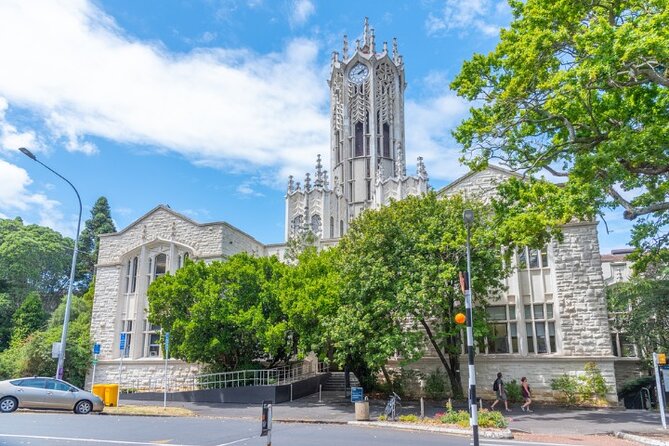
The University of Auckland Clock Tower is a neat breather. It’s a neo-Gothic icon from 1926 with carved limestone featuring mythical creatures and native plants. The tower represents knowledge and is tied to generations celebrating graduations.
This is only about five minutes, but it’s a worthwhile quick stop if you like symbolism. It also helps you transition toward Parnell, where the pace is gentler and the scenery shifts to rose-filled slopes and harbour-adjacent views.
Parnell Rose Gardens: the calm, colorful ending
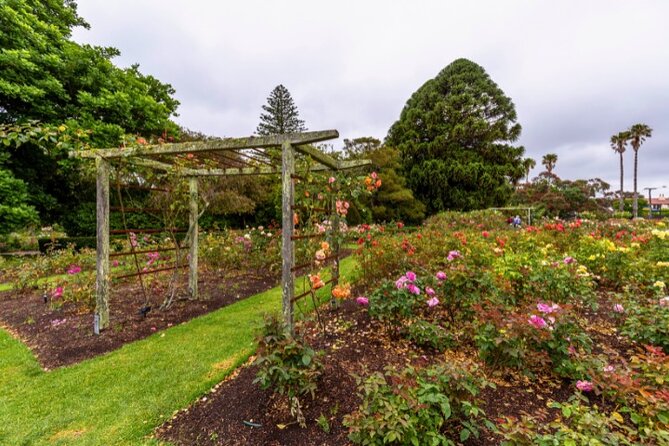
Your tour ends at Parnell Rose Gardens. The description puts the scale at 5,000 rose bushes cascading down the hillside with harbour views. There’s also mention of Dove-Myer Robinson Park, named for Auckland’s longest-serving mayor.
This ending point is practical: it’s a place where you can stop, breathe, and not rush your last photos. If roses aren’t in peak bloom when you visit, you’ll still get the hillside layout and harbour perspective, which are the real payoff.
About 20 minutes here is the right amount of time. More than that can turn into a wandering day, and you might lose the clean “tour finish line” feeling.
How long it really takes (and how to pace it)
The tour is listed at 4 to 5 hours (approx.), and that’s believable if you do what most people forget: you keep each stop honest. Many of the stops are around five minutes. The ones that take longer are the ones you’ll want to linger at—St. Patrick’s Cathedral (15 minutes), Sky Tower (20 minutes), and Parnell Rose Gardens (20 minutes).
If you’re the type who stops for coffee, use it as a reward. For example: take a snack break around Viaduct or Wynyard Quarter, then treat Sky Tower and the cathedral as your “big visual moments.” You’ll feel like the route has rhythm instead of being a long list.
A good approach is to let the app guide you, but set your own rule: spend extra time only at stops that genuinely grab you.
Price and value: $9.99 for a full-feeling Auckland sampler
For $9.99 per person, what you’re really buying is time efficiency and structure. The tour includes a mobile ticket, and most stops list free admission. That means you’re not handing over extra money again and again just to see the sights.
The one paid-feeling moment here is St. Patrick’s Cathedral, where admission is included. In practice, that can be what makes the entire day feel worth it: you get at least one “inside” experience plus lots of free outdoor stops.
So if guided tours have sold out and you still want a well-rounded introduction to Auckland’s center, this is a smart substitute. You get a route that connects neighborhoods rather than bouncing you randomly around the city.
Who this walking tour is best for
This fits you if you:
- Want an intro route that links culture, waterfront, parks, and landmark architecture
- Prefer walking at your own pace and taking breaks when your legs tell you to
- Like story details—Māori-inspired design, a 1967 bronze sculpture, and activism tied to civic buildings
It’s less ideal if you:
- Have limited mobility or struggle with continuous urban walking for half a day
- Expect a person guide to explain every detail in real time (this is app-led)
Should you book this Auckland city self-guided walk?
Yes—if you want a well-structured Auckland overview without paying for a full guided tour. The price is low, the route includes a mix of viewpoints and meaning, and you finish in a place (Parnell Rose Gardens) that feels like a natural ending rather than a forced checkpoint.
I’d especially consider booking if you like the idea of balancing city landmarks with quick park breaks. Places like Victoria Park and Albert Park make this tour feel less like sightseeing and more like living through Auckland for an afternoon—even if you’re doing it at your own pace.
FAQ
How long is the Auckland City Self Guided Walking Tour?
It takes about 4 to 5 hours.
Where does the tour start and end?
It starts at Dingwall Building, 87/93 Queen Street, Auckland Central, and ends at Parnell Rose Garden in Parnell.
Is this tour self-guided or led by a person?
It’s self-guided using an APP. It’s also listed as a private activity, with only your group participating.
What is the price?
The price is $9.99 per person, and you’ll receive a mobile ticket.
Do I need to pay for entry at the stops?
Most stops are listed as free admission. St. Patrick’s Cathedral is listed as having admission ticket included.
Is St. Patrick’s Cathedral included with the tour?
Yes. St. Patrick’s Cathedral is one of the stops with admission ticket included.
When can I start the tour?
The opening hours are 9:00 AM to 8:00 PM, Monday through Sunday.
Is there free cancellation?
Yes. You can cancel for a full refund if you cancel at least 24 hours before the experience starts.
More Tours Around Auckland
- Waiheke Island: Ferry & Hop-On Hop-Off Explorer Bus Tickets
★ 4.6 · 3,311 reviews - Hobbiton & Waitomo Caves Guided Day Trip from Auckland incl lunch
★ 5.0 · 2,677 reviews - From Auckland: Hobbiton & Waitomo Caves Day Trip with Lunch
★ 4.9 · 2,505 reviews - Auckland Dolphin and Whale Watching Eco-Safari Cruise
★ 4.5 · 1,790 reviews - Skydive Auckland
★ 5.0 · 1,516 reviews
Auckland Streets and Backstories
- Auckland: Flavours of the City Walking Food Tour
★ 4.8 · 202 reviews - Auckland Small-Group Walking Tour with Treats
★ 5.0 · 182 reviews - Auckland Food Walking Tour
★ 5.0 · 73 reviews - Auckland Historic Bar Tour
★ 5.0 · 54 reviews - Auckland: Private Customizable Walking Tour with Local Guide
★ 4.6 · 43 reviews
Seeing Auckland in a Day
- Waiheke Island: Ferry & Hop-On Hop-Off Explorer Bus Tickets
★ 4.6 · 3,311 reviews - Auckland Explorer: Sightseeing Hop-on Hop-off Tour
★ 4.0 · 1,180 reviews - Half-day Discover Auckland City Sightseeing Tour
★ 5.0 · 1,080 reviews - Auckland: Hop-On Hop-Off Explorer Bus Ticket
★ 4.4 · 1,064 reviews - Auckland Scenic Half-Day City Sightseeing Tour
★ 4.8 · 532 reviews
Fresh off the boat: newer Auckland tours to browse






Auckland City Sightseeing, compared.
 ★ 4.6Waiheke Island: Ferry & Hop-On Hop-Off Explorer Bus TicketsFrom $593,311 reviews
 ★ 4.0Auckland Explorer: Sightseeing Hop-on Hop-off TourFrom $431,180 reviews
 ★ 5.0Half-day Discover Auckland City Sightseeing TourFrom $461,080 reviews
 ★ 4.4Hop-On Hop-Off Explorer Bus TicketFrom $381,064 reviews
 ★ 4.8Auckland Scenic Half-Day City Sightseeing TourFrom $44532 reviews
 ★ 5.02025 Award Winning: Auckland City Highlights Half Day TourFrom $99516 reviews
 ★ 4.0Arrival Transfer: Auckland Airport to Auckland Central City CentreFrom $26493 reviews
 ★ 5.0Auckland Scenic Day Tour Full-Day- 8 HOURSFrom $133376 reviews
Browse the lists this tour appears in